













We spent two weeks putting the PUMA ForeverRun NITRO 3 through a real training rotation — treadmill sessions, laps on an indoor track, and plenty of sidewalk miles around the neighborhood. This is PUMA’s stability-leaning daily trainer, built around a dual-density midsole that’s supposed to nudge your stride in the right direction without turning into a stiff, over-engineered motion-control shoe. We rotated the shoe through easy recovery days, a couple of faster efforts to see how it held together under pace, and one longer run to get a feel for it over distance. A few of us also brought them into the gym for a session or two, just to see whether that on-road stability carried over to lifting. Between the different surfaces, paces, and use cases, we came away with a pretty complete picture of where this shoe excels and where it still has room to grow. Here’s everything we found, section by section.
Specifications
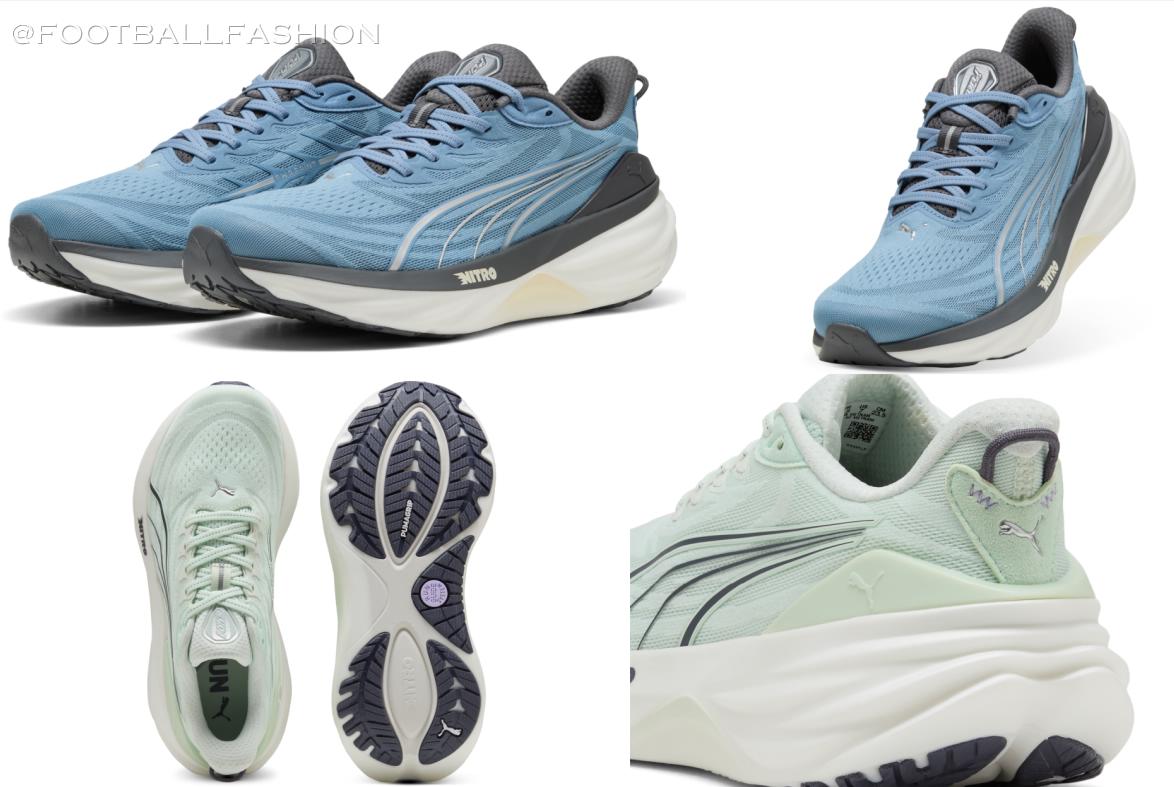
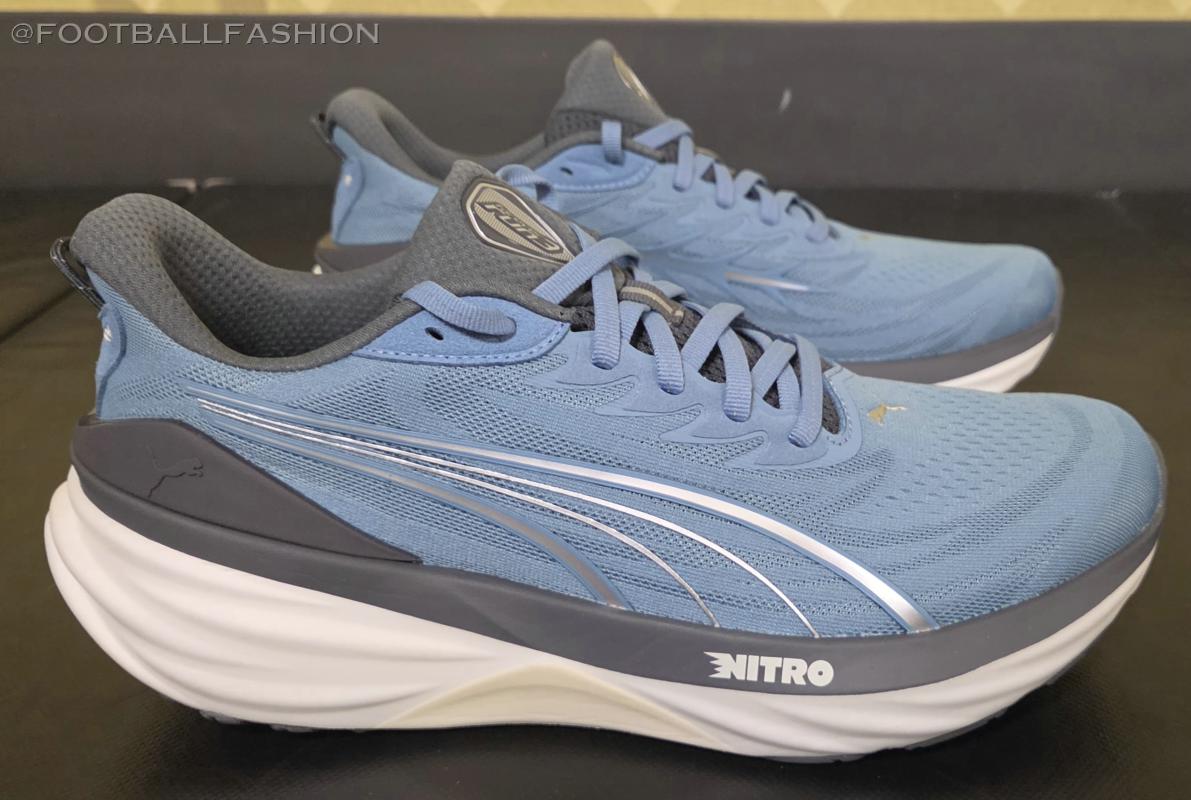
The pair we tested came in the stunning PUMA Zen Blue-Moody Gray colorway. Stack height sits at 38mm in the heel and 30mm at the forefoot, giving an 8mm drop — down from 10mm in the previous generation. Official weight is listed at 290g, though our pair landed in that general neighborhood depending on size. The upper is an engineered mesh with PWRTAPE overlays for lockdown, built with at least 30% recycled material. The outsole uses PUMA’s own PUMAGRIP rubber compound, cushioning is rated medium, and PUMA pegs the shoe’s useful life at roughly 800 km. It’s designed specifically for road running, built for runners who overpronate, and currently only comes in a regular width.
Design
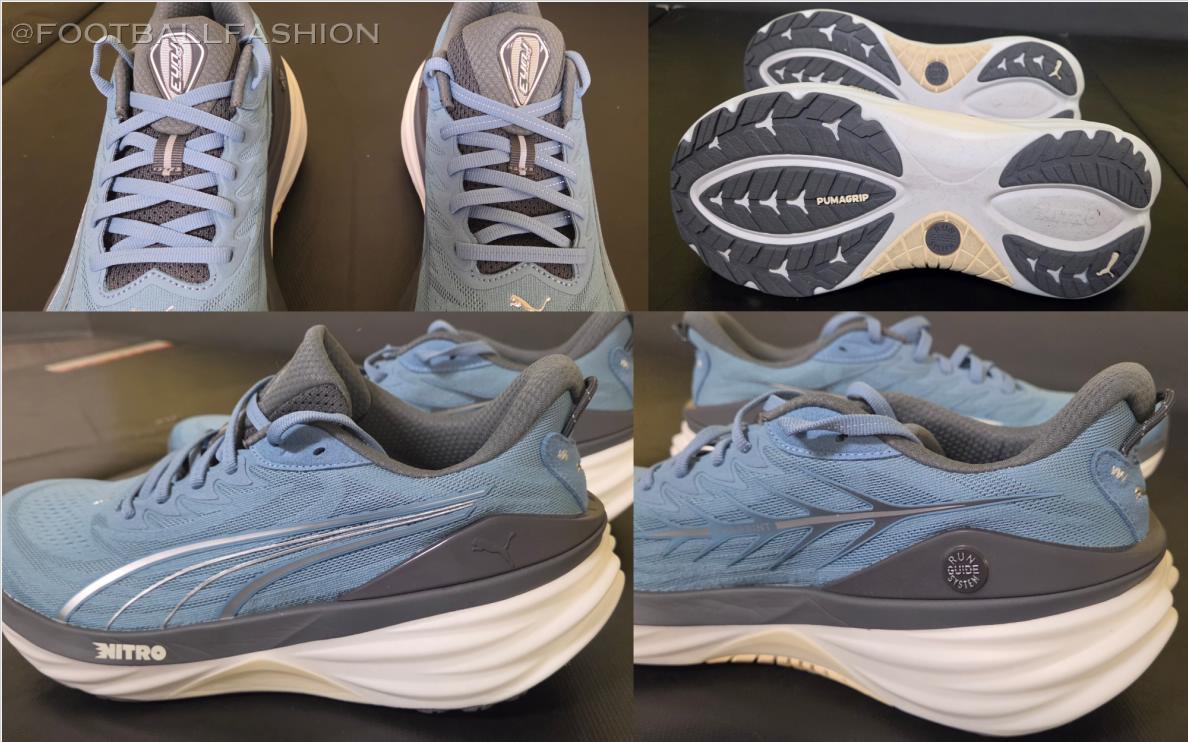
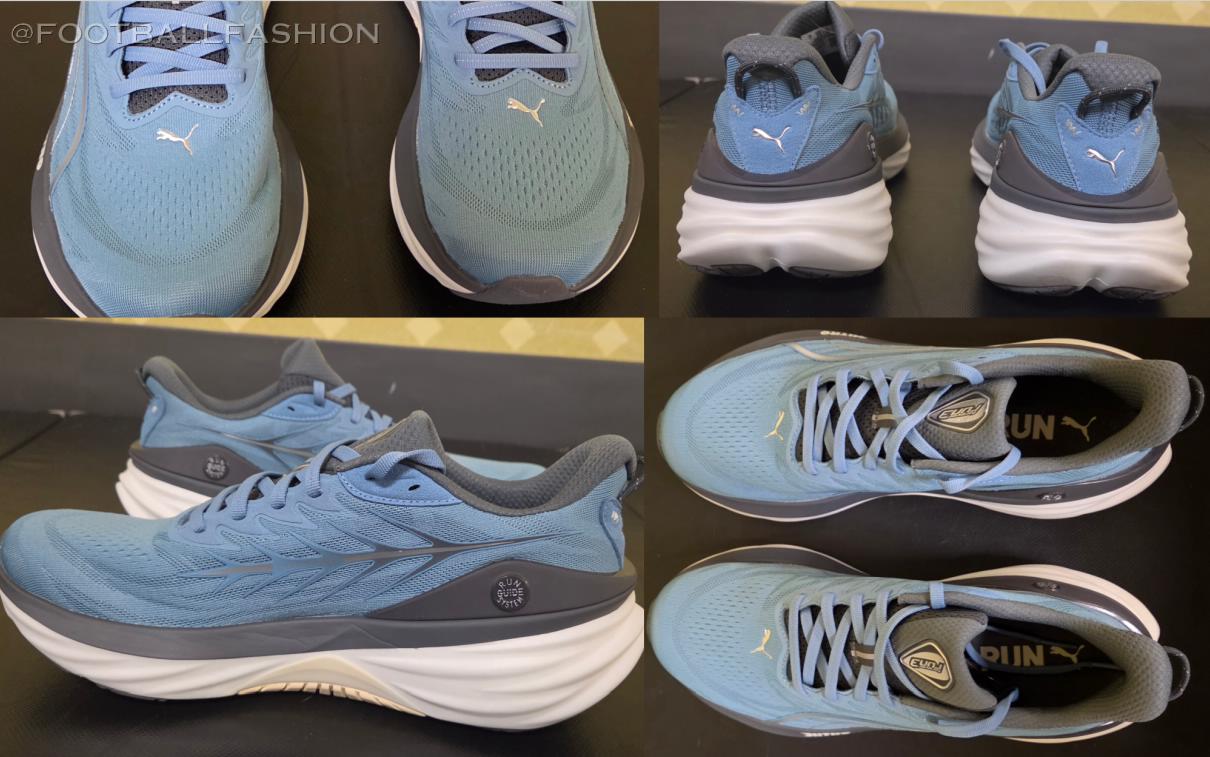
The standout visual detail is the midsole itself: a firmer outer rim wraps around a softer core, and in this colorway you can actually see where one density hands off to the other. It’s a nice touch — it makes the stability tech feel like part of the shoe’s identity rather than something bolted on. Up top, the engineered mesh keeps things fairly clean, with taped overlays doing the structural work instead of heavy stitched panels, which keeps the shoe from looking bulky. The tongue is gusseted and there’s a pull tab at the heel for getting in and out quickly. Around back, a firmer heel clip is built into the design to reinforce the RUNGUIDE system. Overall it reads more like a genuine running shoe than a clunky corrective device, which is exactly the balance PUMA seems to be chasing.
Fit
For most of us, these fit true to size right out of the box, and that held across a few different foot shapes on the team. Compared to PUMA’s plusher, more recovery-oriented models, the upper here runs noticeably narrower and more secure — closer to a snug daily trainer than a cushioned lounge shoe. The lacing and tongue setup does a lot of the work: lockdown is excellent, and the shoe feels dialed in almost immediately without a break-in period. Anyone on the team with a wider forefoot noticed the narrower shape more than the rest of us, so that’s worth keeping in mind if that’s typically been an issue for you in other PUMA models. If you’re used to a roomier toe box, it’s worth trying these on first, since regular width is the only option right now. But for anyone who likes a locked-in, secure feel, the fit is one of the shoe’s stronger points.
Ride
This is where the dual-density setup earns its keep. The softer core underfoot gives a genuinely comfortable landing, while the firmer rim guides the foot without resorting to hard plastic posts or aggressive wedges — you feel gently supported rather than steered. There’s a noticeable rocker to the geometry, more pronounced than we’re used to seeing from PUMA, which helps the shoe roll forward instead of feeling flat or clunky. The PUMAGRIP outsole was consistently reliable across every surface we tried it on — it held up fine on the treadmill belt, gripped well through indoor track turns, and was especially confidence-inspiring on damp pavement during a couple of wet morning runs, which mattered more than we expected going in. Yes, this shoe is on the heavier side compared to lightweight neutral trainers, but it’s roughly in line with other shoes in the stability/recovery category, and on foot it never felt like it was working against us. If anything, the combination of the rocker and the grippy outsole made the transition through each stride feel smoother than the weight on paper would suggest.
Performance
Across two weeks we used the ForeverRun NITRO 3 for easy recovery runs, a handful of faster efforts, and one longer run to see how it held up over distance. It handled that range better than we expected from a shoe built around stability. On easy, conversational-pace days it did exactly what a recovery-leaning trainer should — nothing stood out, which is the point. When we picked up the pace, it didn’t feel like it was fighting us the way some heavier stability shoes can; the rocker and midsole responsiveness let us shift gears without the shoe feeling like dead weight. On the treadmill it felt smooth and predictable for controlled pace work. On the indoor track it stayed stable through the turns without feeling sluggish. And on sidewalks over longer stretches, it held its comfort without breaking down, even as the miles added up. This isn’t a shoe we’d reach for on race day, but as a dependable option for daily mileage and recovery efforts, it performs like an actual running shoe first and a stability shoe second — which is the right order of priorities.
Ventilation
The engineered mesh upper breathes reasonably well for a shoe built with this much structure. The PWRTAPE overlays that add lockdown do reduce airflow slightly in the areas where they sit, so on warmer, more humid runs we noticed a bit more heat buildup than on a fully open mesh shoe. It’s not a dealbreaker for typical training conditions, but if most of your mileage happens in serious heat, it’s worth factoring in. For everyday temperatures, ventilation was a non-issue.
Rooms for Improvement
Weight is the most consistent knock against this shoe. It’s not unreasonable for its category, but runners coming from lighter daily trainers will feel the difference underfoot, especially on faster efforts. The jump from the previous generation is also fairly incremental — the drop change from 10mm to 8mm is the headline update, and if you already own and like the last version, there isn’t a compelling reason to rush out and replace it. Given how modest that generational gap is, it’s also worth watching for the previous model to get discounted once this one is fully in stores, since the ride and support are close enough that the savings might matter more than the update. The rocker, while improved, is still relatively modest by broader industry standards. And with only a regular width available, runners who need more room simply don’t have an option yet.
Experience Wearing In the Gym
We also wore these for a couple of general gym sessions, and the stability tech translates reasonably well off the road. The wide heel platform and firmer midsole rim gave us a solid, planted feeling for squats, lunges, step-ups, and general accessory and machine work — noticeably more stable than a typical cushioned running shoe would be, and stable enough that most of a typical lifting session felt fine in them. Where it falls short is standing barbell work, deadlifts in particular. The taller stack height and softer core work against you when you need direct ground contact and a completely flat, rigid base under a loaded bar — you can feel the cushioning compress slightly under heavy weight in a way that a flatter shoe wouldn’t. For that kind of lifting, the PUMA Activate NITRO is the better tool — it sits lower to the ground and gives a firmer, more connected platform specifically suited to leg day and standing barbell movements. Think of the ForeverRun NITRO 3 as fine for general cross-training days, but not a dedicated lifting shoe.
Bottom Line
The PUMA ForeverRun NITRO 3 is a genuinely solid daily trainer, particularly if you deal with mild to moderate overpronation and want support that doesn’t feel heavy-handed. Even for neutral runners, it works well as a comfortable, stable recovery option. The trade-offs are real — it’s heavier than some competitors, the width options are limited, and the upgrade from the previous version is incremental rather than dramatic. But across two weeks of treadmill, track, and sidewalk miles, it delivered a consistently smooth, dependable ride, and it held its own reasonably well in the gym too. If you’re after stability without a corrective, over-engineered feel, this is worth a serious look.